Free fantasy MMORPG in Hungarian: everything you need to know in 2026
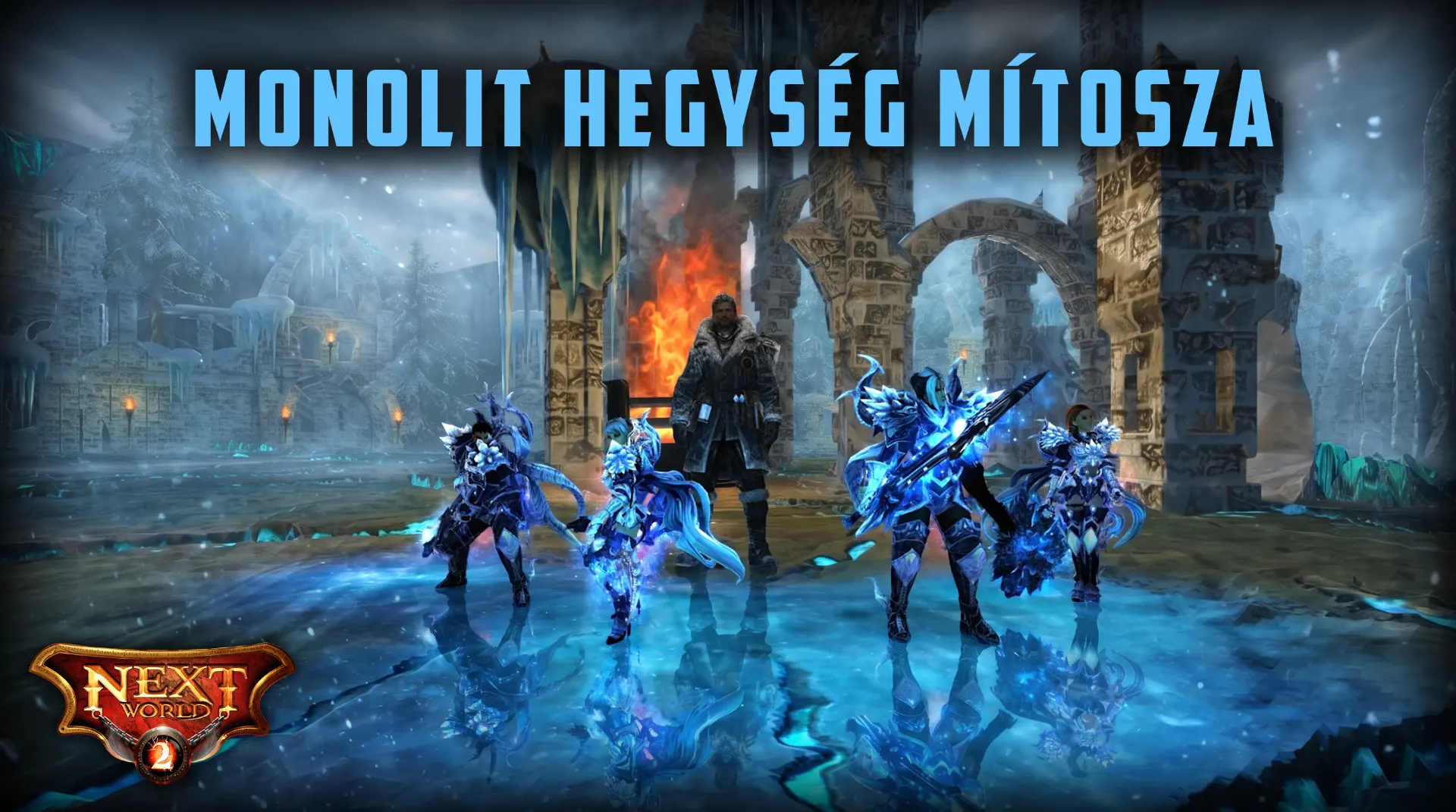
Looking for a free fantasy MMORPG in Hungarian? You're in the right place: this guide covers everything you need to know to get started in 2026. We'll explain exactly what an MMORPG is, what makes a free-to-play game 'free' and where the pitfalls are, why the Hungarian language and community matter, what titles you can choose from this year, how to pick a class for your first character, and what kind of computer you need for all this. It's written for beginners, but returning players will find new info too: we've expanded on every major topic in separate articles, with links for each chapter.
What exactly does MMORPG mean?
MMORPG stands for Massively Multiplayer Online Role-Playing Game. In practice, three things set it apart from other game types. First, its world is persistent, meaning it keeps going even when you're not logged in: cities are bustling, the market is active, and others level up without you. Second, you develop a character long-term: you level up, collect gear, learn skills, and your choices-like your class and specialization-make your hero more and more unique. Third, the heart of the genre is the community: clans, group hunts, trading, rivalry, and friendships.
So, MMORPGs aren't just for a weekend-they're more like a hobby. You don't 'finish' them in 10-15 hours; instead, you settle in: set goals, build a community, and the game keeps giving you new challenges for months. That doesn't mean you have to play for hours every day: most modern MMORPGs, including NextWorld2, are fun even at a relaxed pace, with just half an hour to an hour a day. In return, you get experiences you can't find in single-player mode: the memory of your first boss kill with friends, your first clan war, or a great market deal will stick with you for years.
Day-to-day, this means you log in and there's always something to do: you can progress through quests, hunt rare monsters, craft, trade on the market, jump into the latest Event, or just chat with your clan. The real strength of MMORPGs is this freedom: no one tells you the 'right' way to play. Some players max out their character's power, some focus on the economy, and some log in mainly for the company. All of these are equally valid paths.
But remember, not every online game is an MMORPG. MMO is a broader term: it covers any large-scale online game, from shooters to strategy games. MMORPG is a subgenre where role-playing elements like character progression, classes, items, and story are the main focus. If the terms get confusing, check out our article explaining the difference between MMORPG and MMO: we break it down with examples in a simple way. The main point: a large-scale online shooter can be an MMO, but not an MMORPG; NextWorld2, on the other hand, is a classic MMORPG with character progression, classes, and a persistent world.
The 'fantasy' part sets the scene: swords and magic, dragons and demons, kingdoms and fallen empires. It's no accident this is the most popular setting for the genre: a fantasy world gives developers endless room for classes, monsters, and stories, and lets you escape the everyday in just a few minutes. In a good fantasy MMORPG, the world's story isn't just decoration: quests, locations, and factions are all built from it.
What makes a free MMORPG 'free'?
Here, 'free' means a business model, not charity. Back in the day, most MMORPGs were subscription-based: you paid a monthly fee and got everything in return. Now, most of the market has switched to the free-to-play (F2P) model: downloading and playing is free, and revenue comes from optional purchases. This setup is totally fair, since servers and developer work need to be funded somehow. The real question is what the shop actually sells. This model is actually great for you: you can download and try the game risk-free, and only spend money if you already like it.
It's worth knowing the three main pricing models, because you'll see them all the time in game descriptions. With subscription games, you pay a monthly fee. Buy-to-play games you buy once, then there are no more required costs. Free-to-play games are totally free to start. This guide obviously focuses on the third group, but even within that, there's a big difference in how games make money:
| Model | What the shop sells | How fair is it |
|---|---|---|
| Cosmetic | Cosmetics, skins, decorations; they don't give you any gameplay power | The most fair: paying players just look different, not stronger |
| Convenience | Extra bag space, faster travel, experience bonuses | Acceptable as long as the game is still playable at a normal pace without these |
| Pay-to-win | Power, gear, or progression advantages for money | Best avoided: in the long run, it's wallets competing, not players |
The cosmetic model is the most chill: revenue comes from skins and visual stuff, and you can't buy power with money. In the convenience model, you basically trade money for time: paying players progress a bit faster, but everyone ends up in the same place. Pay-to-win starts when the shop sells power: stronger weapons, better upgrade chances, competitive advantages. Quick home test: open the shop in your first hours and see what the most expensive items are. If flashy cosmetics are at the top, that's a good sign; if you see 'guaranteed power-up packs', be careful.
Of course, in practice, the lines are blurry: most free-to-play games sell something from all three categories, and the devil's in the details. Here are a few questions worth asking before you invest hundreds of hours in a game:
- Does the shop sell power you can't get in-game at all, or only at an unrealistically slow pace?
- Can you earn premium currency by farming or trading in-game, or is it only available with a credit card?
- Are the convenience extras really extras, or is the game intentionally made annoying without them?
- How much of an advantage does spending give you in player vs. player (PvP) combat?
- Is it clear what you get for your money, or does power come from loot boxes like a gamble?
If the answers to these are reassuring, you're in a good place. For mobile MMOs, these questions matter even more: there, energy systems and buyable wait times are the typical traps. We've put together a full checklist with concrete examples and warning signs in a separate article: free MMO games: what to watch for before you choose.
For a concrete example: in NextWorld2, registration, download, and all core content are free, with no subscription. The premium currency is Karzium, but you don't have to buy it: you can also earn it by farming and trading in-game, including at the Trading House, where over 100,000 items change hands between players. The developer philosophy is clearly not pay-to-win: spending gives you convenience and cosmetics, not invincibility.
Why does it matter if you can play in Hungarian?
At first glance, it's a language thing, but it's really about the experience. In an MMORPG, you're constantly reading: quest texts, item descriptions, skill explanations, Event announcements. If you get all this in your native language, you don't have to translate in your head, you just play. The story also hits differently: a well-written lore in your own language draws you in way more than a half-understood wall of English text. As a beginner, it's a huge help not to have to figure out mechanics, stats, and crafting with a dictionary in your lap. Sure, playing in English is good language practice, but for your first MMORPG, just learning the genre is enough; the language barrier makes a lot of people quietly quit after a few weeks.
There's a special case when the game isn't just translated, but originally written in Hungarian. For example, NextWorld2's ten-chapter lore isn't a localization, but original Hungarian writing: you read the story of Kigan's world and the history of the three powers of Triangulum in the original, in Hungarian. With a translation, some of the vibe always gets lost; here, there's nothing to lose.
The second reason is the community, and that's just as important. MMORPGs are all about social play: chat, clans, group hunts, and haggling on the market are all communication. In a Hungarian community, you don't have to stress about how to say what you want in English: you just ask, and usually get a helpful answer. Plus, you can start out with friends, siblings, or even your kids, no matter their language skills. It might seem minor, but it also matters that in a Hungarian player-base, the community is active during local evening hours, not matched to another continent's peak time. For example, around NextWorld2 there's an active Hungarian Discord community, where you can ask beginner questions or recruit for your clan: discord.gg/nextworld2.
The third reason is more practical, but when you need it, you really need it: Support. If you run into a technical issue or have a problem with your account, it's a totally different experience to write in Hungarian to a Hungarian team than to open a ticket with an international publisher and get template replies. With a locally developed game, the devs live in the same time zone and speak the same language as you. And if you report a bug or have an idea, in a smaller team it doesn't get lost at the end of a queue of thousands, but actually reaches the people making the game.
It's a fair question: if this matters so much, why are there so few Hungarian-language MMORPGs? The short answer: the Hungarian market is too small for big publishers to localize, and MMORPGs are one of the most expensive and complex game types, so local teams rarely take them on. We've written the long answer in two articles: our analysis of the Hungarian MMORPG market looks at why big publishers don't translate, and our article on Hungarian-developed MMORPGs covers what local games have been made and are still being made.
What free fantasy MMORPGs are available in 2026?
In 2026, there's plenty to choose from. Most big international MMORPGs are free to try or totally free-to-play, so you can get a taste of the genre without spending any money. The selection is varied: there are subscription-based veterans with free trials; games you can start for free but need to pay for expansions; and fully free-to-play titles, from fast-paced action combat to open economy sandboxes. Before you commit to one, check three things: what's the business model (on the cosmetic-convenience-P2W scale above), how active is the community and what time zone are they in, and is there a Hungarian language option.
Most international titles fail at the last point: almost none have official Hungarian language support. You play without Hungarian subtitles, and Hungarian players are scattered, looking for each other on international servers. For beginners, these two things-the language and the fragmented community-are what stop most people.
In Hungary, only one title gets around both obstacles: NextWorld2 is the only free, unique Hungarian-developed fantasy MMORPG. The game is made by Budapest-based Donut Interactive, with its own engine and world: on the continent of Kigan, a ten-chapter, unique lore unfolds about the three powers of Triangulum. It's not a translation or server of a foreign game, but a Hungarian game from the ground up, with Hungarian text, Hungarian Support, and over 10,000 registered players. The server runs 24/7, and since early 2026, the whole community plays together on the merged Kentanix+Minotaurusz server, so you'll always find company. There's no shortage of content either: over 40 rotating Events, a clan system, pet and mount systems, and the Trading House are all waiting for you. You can download the client from the official site, and you can also wishlist the game on Steam.
Once you've made your decision, the next question is just what character to start with.
How do you choose a class, and how do you get started?
Choosing your class is your first big decision, because it shapes how you'll experience the game for a long time. In NextWorld2, you can pick from four classes, and each splits into two specializations, so you can find your style among eight different ways to play:
| Class | Playstyle | Specializations |
|---|---|---|
| Warrior | Melee frontliner, a true artist of battle | Inquisitor (raw damage), Protector (combat boosted with protective auras) |
| Ninja | Fast and agile assassin | Shadowblade (dagger melee), Marksman (bow ranged) |
| Shaman | Magical Support: healing, shields, buffs | Dragonborn, Lightningborn |
| Ezra | Dark sorcerer, master of life-stealing black magic | Dark Mage (devastating spells), Doomlord (melee empowered by dark forces) |
As a beginner, you can't make a bad choice, since you can play through all the content with any class; it's just about what you enjoy. Like standing in the front lines and dishing out hits? Warrior. Prefer fast, agile gameplay with daggers or a bow? Ninja. Want to heal and buff your teammates? Shaman. Does dark magic sound exciting? Ezra. For a detailed comparison with strengths and tips, check out our which class to choose in NextWorld2 article, and in the official class descriptions you can watch short videos of every specialization and skill before you decide.
Here's a little taste of how different the specializations feel. As a Warrior Inquisitor, you slash with icy and flaming strikes (Iceblade, Flame Surge), while as a Protector you put on Light Armor and become a rock on the front line. As a Ninja Shadowblade, you strike from the shadows with Ambush, while as a Marksman you rain arrows on enemies from afar. As a Shaman Dragonborn, you shield allies with Moonshield and call down Meteor Shower; as a Stormborn, you heal and strike with lightning from the sky. Ezra as a Dark Mage destroys with hellfire and shadow orbs, and as a Doomlord, empowers their blade with damned souls and terrifies enemies.
Getting started is just five simple steps:
- Register for free: it only takes a few minutes, and all you need is an email address.
- Download and install the client: about 15 GB, with an automatic installer; you can read about the system requirements in the next section.
- Get to know the world: the background is set by the three powers of Triangulum, Selakim, Quila, and the fallen Rusus Republic; our kingdoms overview will quickly show you which side fits you best.
- Pick a class and jump into your first quests: the game will teach you the basics step by step at the start.
- Join the community: get into a clan and keep an eye on the Events, because there are over 40 rotating on the server all the time.
The three powers are actually very different in character, so your choice really matters. Selakim is the merchant kingdom of the coastal waters, living off the treasures of the sea. Quila rules the vast forests in the heart of the continent, with a fearsome land army. The fallen Rusus Republic is the great mystery of the world: once led by a senate and fabulously rich, it vanished into history, and its abandoned cities still fuel legends.
Don't try to do everything at once in your first hours: follow the main quests, they'll guide you through the cities and mechanics, the rest will come naturally. And don't be afraid to ask questions in chat: every healthy MMORPG community welcomes beginner questions. But there are two things worth learning early. One is the pet and mount system: mounts let you travel faster, and your pet is a loyal companion on your adventures; we've collected all the details in our beginner's guide to mounts and pets. The other is that you can easily avoid the typical beginner mistakes of the first days if you know what to watch out for: that's exactly why we put together 10 practical tips in our NextWorld2 beginner's guide.
How demanding are these games on your computer?
Modern MMORPGs vary a lot in system requirements: the newest, graphics-heavy titles need a strong video card and lots of memory, while older or well-optimized games can run on almost anything. Two things to keep in mind: First, you don't play an MMORPG for just twenty minutes, but for months, maybe every day, so smooth, stable gameplay is more important than maxed-out graphics. Second, every computer works harder in crowded cities and big Events than in empty fields, so you shouldn't aim for just the bare minimum specs. Luckily, low requirements are common in this genre, since developers want as many people as possible to play together.
NextWorld2 is especially beginner-friendly in this regard: it's designed to have low system requirements, so even a 10-year-old setup can handle the minimum. You don't need a gaming PC: an average home computer from the last few years is more than enough, and the game runs on both Windows 10 and Windows 11 (64-bit). The exact requirements are:
| Component | Minimum | Recommended |
|---|---|---|
| Operating system | Windows 10/11 (64-bit) | Windows 10/11 (64-bit) |
| Processor | Intel Core 2 Duo / AMD Athlon 64 X2 | Intel Core i5 / AMD Ryzen 5 |
| Memory | 2 GB RAM | 8 GB RAM |
| Video card | GeForce 8600 / Radeon HD 2600 | GeForce GTX 1050 / Radeon RX 560 |
| Storage | 20 GB free space | 20 GB SSD |
The client is about 15 GB, and with an average connection, the download takes around 20-60 minutes. The installer is automatic, so you don't have to do anything manually. An SSD isn't required, but it does noticeably speed up loading, which is why it's in the recommended column. You'll find the download link, installation steps, and the most common install questions on the download page.
Low system requirements have a hidden bonus: your friends can run it too. MMORPGs are best when your buddies can join, and the weakest computer is always the bottleneck. If the game runs on an old laptop, nobody gets left out. You don't need any special internet either: a standard broadband connection is more than enough, as long as it's stable. And since the game is free, the best way to test if it works is to just try it: you'll know in half an hour how it runs on your own PC.
Frequently Asked Questions
Is NextWorld2 really totally free?
Yes. Registration, download, and all core content are free, and there's no subscription. There is a premium currency, Karzium, but you can earn it in-game by farming or trading in the Trading House, so you won't miss out on anything if you don't spend money. The monetization is intentionally not pay-to-win: you'll only pay if you want to, and skipping the shop doesn't lock you out of any content.
Can I start alone, or do I need a group?
Feel free to start solo: the first quests are easy to do on your own, and the server is up 24/7, so you'll always find other players around. Sooner or later, it's worth joining a clan, because group hunts and Events are where the real fun is. You can find a clan easily both in-game and in the Discord community.
How long until I can actually start playing?
Registration takes a few minutes, downloading the roughly 15 GB client takes 20-60 minutes depending on your connection, and installation is automatic. Realistically, you can be adventuring in Kigan's lands about an hour after you decide to start.
Where can I get help if I get stuck?
In several places, all in Hungarian. For technical and account management questions, check the FAQ page. For gameplay details, the official wiki has you covered. If you need live help, you can always ask the Discord community and other players.