The Story of the Game
Discover the history of Kigan
The story of the game
The world of Kigan in a nutshell
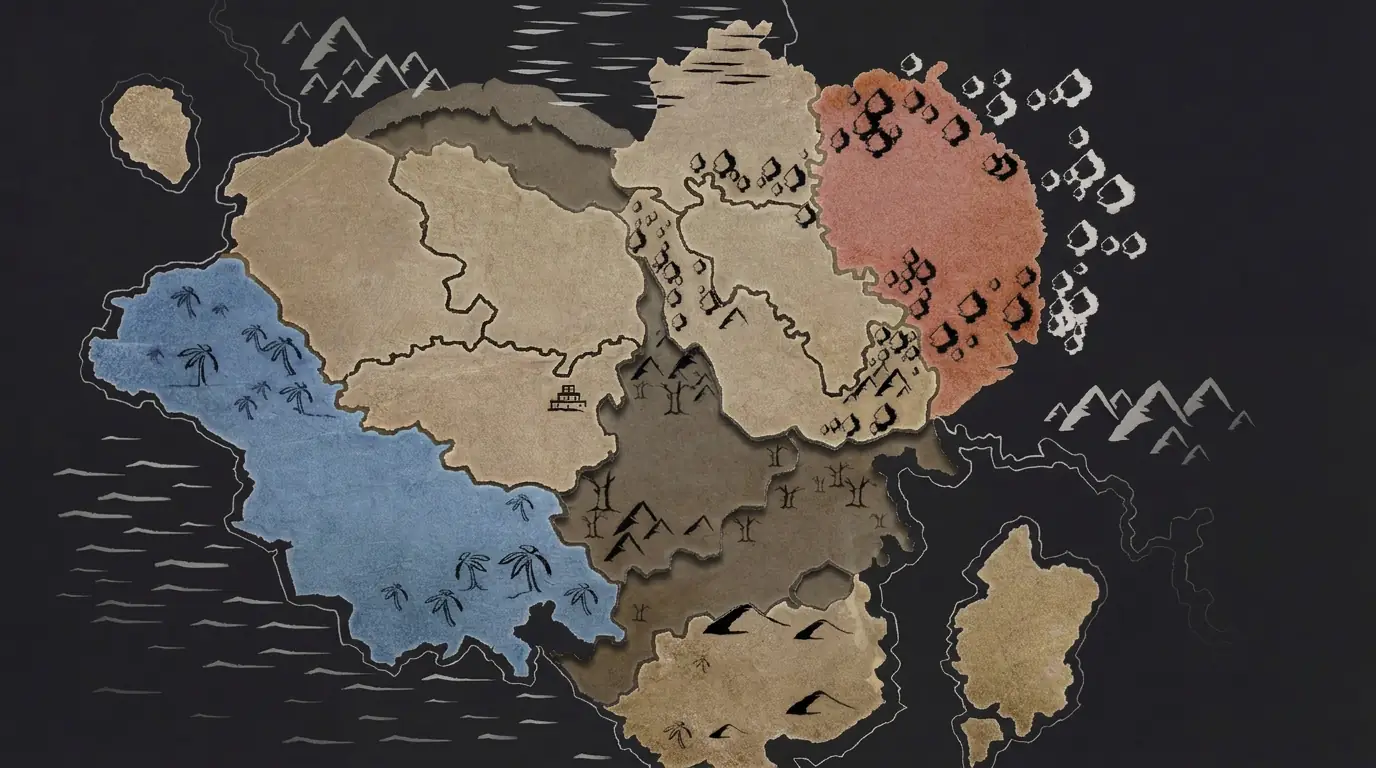
The name of the NextWorld2 world is Kigan, which lies on the planet Karzer. According to legend, the Isigurs, creators born from the stars, made seven planets, and life, due to their mistakes, was swept into a series of wars. Kigan's history spans ten eras, from the creation myth, through the search for a home, the reign of the Demon Regent, and the era of Triangulum, all the way to the Age of Awakening. Today, three great powers share the lands: the Selakim Kingdom, the Quila Kingdom, and the legacy of the fallen Rusus Republic. This is the world you enter when you start your journey with one of the four classes.
Chapters
I. Creation Myth
According to legend, the Isigurs were born from the stars before life itself. They were all-powerful but not all-knowing beings, masters of the Universe and its most loyal servants. For billions of years, they had only one goal: to discover all the wonders of the universe. But what joy is there in discovery if there's no one to share those wonders with?
In their loneliness, they created seven planets and connected them with the Star River. Then they began to create life. Each Isigurs added their own idea of life, hoping that when their children grew up, they could join them in exploring the Universe. But they made a serious mistake without meaning to. Since each created their children in their own way, life across the seven worlds became so different that peaceful coexistence became impossible.
The Isigurs, having always been alone until then, didn't understand the concept of violence. As their children shed each other's blood, they discovered a new wonder: war. They should never have learned about it! Horrified, they watched as their own creations, by their very nature, killed each other for power, hatred, or fear. Even worse, their worry for their children caused conflict among themselves.
Discovering the wonders of the Universe and sharing them no longer mattered. The Isigurs now cared only for their own creations. They descended as gods and taught their children how to fight each other. The creatures' knowledge grew, their tools advanced, and sometimes a Isigurs even created a new species as a weapon for their favorite child.
But nothing lasts forever. After thousands of years, when so many peoples had perished and so many empires faded into oblivion, their creations decided: enough fighting. They refused to keep killing each other just because of their gods' whims.
Some of the Isigurs realized how corrupted their souls had become. Others were enraged by their children's rebellion. They wanted to wipe out the rebels, but found themselves opposed by their own kind. The war reached a new level: it was no longer about which species would survive. Now, the survival of life itself was at stake. And in this war, the Isigurs didn't just play as game masters above the board-they joined the battles themselves, leading their children.
The seven worlds burst into flames, but those flames died out as quickly as they had started. During the bloodshed, the Isigurs discovered yet another wonder after a long, long time: they learned what it meant to live, after almost all of them had died. Their children could never harm them, but could easily slaughter each other. The first battles were followed by a stunned ceasefire as everyone realized even gods could die.
The surviving Isigurs, finally understanding what it means to live and die, immediately made peace with each other and decided to root out war from the seven worlds, from the Seven Isles of Peace. But how? How could they punish those who couldn't live in peace without destroying them? None of the Isigurs wanted to kill anymore, but they didn't want their children to kill again either. No blood could stain the flag of peace.
The solution was an eighth planet. The Isigurs joined forces to create the biggest and most distant world, cut off from the others, outside the Star River. A prison. Karzer, or as it was whispered on the Seven Isles of Peace: the Next World.
II. Karzer
Karzer is our planet, the eighth among the worlds of the Isigurs, and although it was originally meant as a prison for violent races, our home is far from unfriendly. There are countless habitable, fertile regions, and only a few places that adventurers with better luck should avoid.
Since Karzer is inhabited by creatures exiled from the Seven Isles of Peace, it boasts a very diverse population. According to uncertain estimates, we humans make up the majority. Unlike other races, we multiply like mushrooms, outpacing zombies, which is good, since they create offspring by biting. Plus, we survive even on the edge of the underworld; maybe only in the Land of Lava Seas and underwater haven't we spread yet, but that won't always be the case. We have a special knack for, let's be honest, getting it on with other humanoid races, so it's no wonder you bump into half-breeds everywhere.
Let me say a few words about the unusual wildlife of Karzer. Well, those creatures are outcasts too, but thanks to their mercy, the Isigurs spread a few gentle animals around. So not every chicken eats the fox, and among the sheep, there are plenty that prefer grass to a shepherd's throat.
The same goes for plants. The brave venture into the forests, and that's fine, most trees are harmless, like a filleted troll. But there's no shortage of poisonous, spike-shooting roses, strangling pea vines, sunflower plants with teeth, or acid-spitting ferns, just to name a few of Karzer's wild flora. And, brave adventurer, in some enchanted places, you might even get attacked by giant veggies. Yep, thank a wizard who tried to protect their land by enchanting the plants. Now they've built their own society and don't like outsiders much. Especially those who eat their relatives for lunch.
Karzer's largest continent, where we live, is named after a beautiful Isigurs, Kigan. The most striking feature of Kigan is the huge, unscalable, and impassable mountain range called the Elkiran Peaks, which splits the continent in two. What's beyond the rocks? My friend, many Kigani would love to know.
Some rumors say that during the migrations, a group of mages who guarded the greatest secret crossed the mountains to hide. To keep anyone from following and stealing their knowledge, they made the mountains impassable with magic. The leader of this group was the beautiful Elkiran witch. Yes, you guessed it, the mountains are named after her... ahem... peaks.
Other legends say Elkiran was a Isigurs, and made the mountains impassable to keep their own exiled creations safe there. These beings have since built a huge, thriving empire.
But there's another legend, which says Elkiran sealed off this side of Kigan from the wild beasts of another Isigurs, so they couldn't destroy us. Over the millennia, those monsters died out, and now only death lives on the far side of the mountains.
Mysterious, right? Better get used to it, there are lots of secrets on the surface of Karzer. Do you know how many continents and islands there are on Karzer? No? Don't worry, you're not the only one- even the best scholars don't know. Elkiran Peaks aren't the only obstacle to exploring the planet. The waters, whether rivers, lakes, seas, or oceans, are so dangerous that only the bravest sailors, and only with the strongest ships, dare to sail them. On top of that, during the wars, magical creatures set up hundreds of supernatural barriers all over the continent. So don't be surprised if the ground suddenly disappears under your feet and you find yourself in nothingness, or you bump into an invisible wall.
And if all that wasn't enough, legend has it the Isigurs set the continents in constant motion to force some kind of peace on us and the others suffering on distant lands. So, my friendly traveler, where there was once a mountain, there might be an ocean a few months later. Thanks to this magical chaos, you never know if, after teleporting, you've landed in some hidden corner of Kigan or on the soil of a previously unknown continent.
That's why only a few residents of Kigan dare to leave the continent. And it's probably the same for people from other lands, because it's rare for a gentle soul to show up in a village tavern and confidently say they're from another part of Karzer. If you meet one, take a good look, because that's a rare bird.
The Seven Isles of Peace
The Seven Isles of Peace, my friend, is a place we'll never reach. As the name suggests, everything there is peaceful and full of love-it's paradise on earth. There's no place for violence, conflict, anger, or anything harmful. On Kigan, some religions believe that if you live your life with honor, good intentions, and a pure heart, when you die, the Isigurs will let you return to the Seven Isles of Peace.
If you look up at the sky, you can see them: the seven brightest stars, close to the Lad-lav Nebula. Maybe one day our gods will forgive us all, and then Karzer might also become part of the islands of peace. Maybe…
Lad-lav Nebula
Imagine a planet where creatures live that will never, ever be able to live in peace. Creatures whose very nature is to destroy. Creatures the gods kicked so far from paradise that they could never find their way back, even by accident. Got it? Of course you do, just look around, because that's us, the inhabitants of Karzer.
Now imagine creatures that weren't even allowed among us, because compared to them, we're as gentle as a baby at its mother's breast. These monsters, given destructive power, were locked by the Isigurs in Lad-lav Mist, that purplish patch that glows in the sky on the darkest winter nights.
So, my friend, if you think that all the evil that could exist, all the crimes that could be committed, couldn't bring a worse punishment than living on Karzer, just remember: there's at least one place that's worse. Beyond the stars, in the cold, pitch-black frost, where there's no earth, no sky, only pure hatred lost in purple mist waiting for you. Suddenly, Karzer doesn't seem so bad, does it?
Kigan history
What can you say about Kigan's history? Well, you definitely can't say it was short or peaceful. No, my good wanderer, here the first letter of written history was penned with spilled blood. Just look at the first age…
III. The Age of Seeking a Home
The first age recorded in history is counted from the legendary exile, though historians argue a lot about when that was. Some say a hundred thousand, others say ten thousand years before the birth of Wigand Kosh. One thing's for sure: this age began when the first races appeared on Kigan's lands-humans, minotaurs, nagas, orcs, trolls, zenites, and so on, until you drop.
The migrations were long and exhausting, because, well, that's how migrations are. With all the coming and going, many peoples clashed with each other, since sometimes two races wanted the same handful of land. That's how it happened that humans fought the ifrits for the seas, and the golems clashed with the ents and stone giants for the Elkiran Peaks. It took a long time for the first villages to be founded, the ancestors of today's cities, and even longer for the first countries to form. That's when infamous regions like Ork Land or the Land of the Dead were born.
The age ended when the Empire of Two Stars was declared. After King Minotaurusz and the Naga Queen got married-who would've thought-a pact was formed between the minotaurs and nagas. Their united army was so powerful that they could easily conquer most of Kigan. Many races, including us humans, were forced into slavery. Only a few free domains remained, either because their lands were worthless or because their lords were willing to pay for their freedom.
IV. The Age of the Rabble
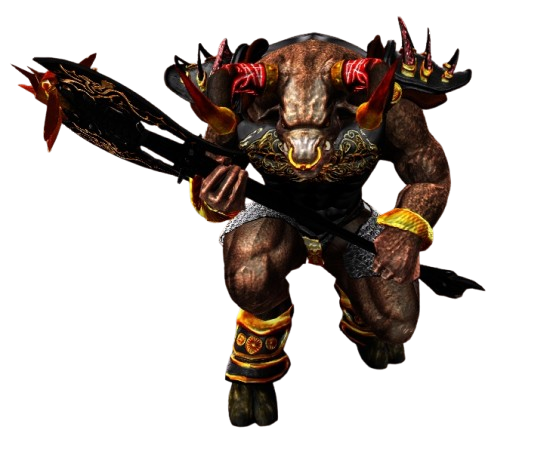
The fall of the Empire of Two Stars was finally brought about by the zenites, who, together with us and other slave races, rebelled against their rulers. The great uprising turned out to be a huge mistake, since the minotaurs and nagas slaughtered six out of ten of the rebelling slaves. More than half the zenites died in the massacre. The only reason the Empire of Two Stars collapsed like a house of cards was because it was led by a married couple-and, trust me, that's ruined much bigger and stronger things before.
A disagreement broke out in the empire between the minotaurs and the nagas, especially between the king and queen, about who was to blame for the rebellion, who let the slaves get too strong. The quarrel turned from marital squabble into civil war, and that was the end of the Empire of Two Stars.
The Naga Queen and King Minotaurusz didn't wait for the other to die, they ended the marriage before that. The queen retreated to her city-sized temple, while King Minotaurusz and his followers found refuge in a fortress on the Land of the Dead, hiding from the nagas and slaves chasing him. What can I say, a woman's wrath can chase you to the ends of the world.
The once-flourishing kingdom was then ravaged by slaves who suddenly gained their freedom but had no idea what to do with it, and by bandits arriving from other lands. A certain bandit leader, Wu-Zhein, along with his most loyal followers-his concubine, house seer, and who knows what else-plus the witch Thebun-Lanue, saw the opportunity to declare their own empire. Their gang forcefully absorbed the marauders roaming the former empire's lands and forged them into an army, then proclaimed the Radiant Empire.
Of course, this domain was anything but radiant. According to the stories, when Wu-Zhein took power, even the sun left Kigan. And it was right to do so, because anyone who didn't escape in time, like the zenites, didn't have much to look forward to. The best outcome was joining the ragtag mercenary army and surviving the first mission. If you avoided the army and were weak or ugly, you could starve to death under the crushing taxes. Otherwise, you were dragged off to the slave markets, and even that was the lucky outcome. The other alternatives... well, let's not go there.
The lands began to wither, crime thrived, and families were torn apart or destroyed. Everyone avoided the Radiant Empire if they wanted to see tomorrow.
There was one more major event in this age: the Shaman League was founded. This alliance brought together the good mages under one roof, so they could keep black magic in check with their combined power. They made themselves independent from governments, and for a good price-since they had to make a living too-they were willing to help anyone.
As for the dark mages, being more cunning, they stayed close to power and wealth, always eager to please any crowned head. Just remember Wu-Zhein's house witch, Thebun-Lanue.
V. The Age of Ascension
The Radiant Empire, like any rotten fruit, quickly decayed. Wu-Zhein and Thebun-Lanue were great at leading any bandit gang, but had no talent for running a country. The only way they could handle the daily infighting was by killing off anyone who wanted the throne. But that usually meant thinning out their own lieutenants, since most rivals came from their own ranks.
On top of that, Wu-Zhein wasn't satisfied with just his Radiant Empire-gotta love that power-hungry heart. He kept provoking the nine countries bordering his empire with constant raids. And as the saying goes, if you poke a sleeping ghoul, you'll lose your head. After Wu-Zhein's bands massacred several villages during their pillaging, the countries joined forces and invaded the Radiant Empire. Even with a well-prepared army, Wu-Zhein wouldn't have stood a chance, especially when attacked from all sides.
Our not-so-heroic bandit king and his lady only escaped the rapidly collapsing Radiant Empire through trickery. Only a few hundred of their followers managed to go with them; the rest died on the battlefield at the hands of nobler soldiers or grim executioners.
While Wu-Zhein and Thebun-Lanue holed up in the northern lands inhabited by the Zenites, the rulers of the countries who had united against their common enemy started fighting over the Radiant Empire's territory. The Zenites got the worst of it, even though they weren't even involved. Their newly founded empire was quickly taken by Wu-Zhein, who enslaved them. That's how the Zenite country became the Lost Empire, and the Zenites-reduced to just a few thousand-became the eternal servant race.
In the end, the rulers managed to divide up the Radiant Empire without military conflict-or more accurately, they just absorbed it. The short but very successful campaign against Wu-Zhein made the rulers realize how powerful unity could be. So they decided, instead of dividing up the land, to pool everything together and unite under a single banner.
The ruler came from the richest and most powerful country, from the Kosh family that ruled Lotharan. There were some objections, of course, but the sound of gold and clashing swords quickly made the opposition more cooperative. The ruling houses of the other eight countries formed a sort of council, balancing the new empire's power and keeping the emperor on the right path. That's how the continent's biggest and most magnificent empire, the Kigan Imperium, was born.
After that, the Shaman League managed to get black magic banned in the Imperium. Anyone caught using dark magic was executed without trial. To make this work, the emperor created a special military branch: the Warrior Inquisitors. These fearsome warriors, reinforced by members of the Shaman League, tirelessly hunted down black mages.
The smaller countries that didn't join the Kigan Imperium still allowed the Warrior Inquisitors into their lands, keeping good relations with the Imperium and the Shaman League. Only a few domains sided with darkness. The Imperium hit these with sanctions, and they became regular refugee camps for dark mages. Not exactly the best soil for a country to thrive.
VI. The Age of Prosperity
This era, my friend, covers the most beautiful thousand years of Kigan's history. The Kosh dynasty and the Council of Dynasties ruled the Empire in harmony. Sure, they sometimes bickered like a young couple, but the continent flourished-not just the meadows. Its people lived in abundance and peace, and if the Isigurs still watched Karzer, they surely saw their once-outcast children grow up with satisfaction.
Still, the three greatest tragedies of this age led to the Imperium's downfall. The first sign of decay was a drought that lasted for years. It scorched the land, withered the forests, turned lakes into deserts. Even the reptiles of the Sun Desert suffered, and they usually thank you for tossing them into a bonfire.
To avoid the end, the ruler at the time, Lidan Kosh, was forced to ask for help from black magic. Of course, the Shaman League protested, but when the people are thirsty and starving, what can you do? Kosh summoned the continent's greatest black mages and demanded a solution in exchange for amnesty.
After the black mages brought the rain, each of them got their pardon. Kosh wasn't stupid, though-he twisted things a bit. The laws still banned black mages from forming groups or practicing without royal permission.
But comfort is a powerful thing, and nature can be a pain. The dynasties, and even the emperor himself, weren't shy about turning to black mages if nature didn't give rain, if the crops failed, if the cows didn't give enough milk, or if they just had an itch. The Shaman League, who didn't want to mess with the world's order, wouldn't do these spells for any price, but they started to look more and more suspiciously at the black mages' activities.
This conflict ended badly. The Shaman League refused to help the Imperium in any way, which gave the black mages political influence. Nothing stopped them from forming their own alliance, the Ezusz Azra. This legalized black magic in the Imperium and in the countries that followed it like puppies. They tried to disband the Warrior Inquisitors, so those became mercenaries for the Shaman League. The League already suspected what later became obvious: the black mages were up to something really bad. They just couldn't prove it. Even though they were never outlawed, the Ezusz Azra managed to make people suspicious and distrustful of the Shaman League, which meant less work for them and, as the age drew to a close, fewer members.
Meanwhile, the Ezusz Azra moved forward, wanting to put their own emperor on the throne. The plan was simple but clever: marry one of their witches to the emperor, and after the witch-empress gives birth to a mage child, the father has a tragic accident. You know, gets shot in the back with an arrow or the royal woodcutter's axe falls on his neck six times-totally by accident. Then the mage kid gets the throne. There were only two problems. One, the laws strictly forbade the ruler from marrying a mage, and especially from putting a mage on the throne. Plus, the Council of Dynasties was stubborn. And two: for some reason, only women ever got the crown in the Kosh dynasty.
The Ezusz Azra got around the first problem with a simple trick: they just hid the magical abilities of the bride-to-be, and later the child, from the world. Only another mage could reveal hidden magical powers anyway, but by then the Shaman League wasn't allowed anywhere near the ruler.
But the second problem wasn't so easy to fix. At first, they just hoped a man would get the throne. Then, around the seventh generation, they started to suspect that the crown of the Kigan Imperium or the male heirs of the Kosh dynasty were cursed by the Shaman League. And this was a problem the Ezusz Azra had to solve, because as everyone knew, only women could pass on magical power. And women can't make babies with other women-or at least, that's what most people thought back then.
Not even the best curse-breakers could lift the curse, and the spies sent to the Shaman League kept dying in suspicious accidents. The Ezusz Azra finally lost patience and did something they later regretted. They summoned Éxina.
Legend says Éxina was among those creatures the Isigurs exiled from the Seven Isles of Peace, but judged so dangerous they didn't even dare let them onto Karzer, so they were imprisoned in Lad-lav Mist. You know, that purple cloud up there in the starry sky.
To be real, Éxina was a female demon with powers that magical creatures would die for. But she was known for being fickle and dangerous-no surprise, she was a woman, after all, and aren't they all? When she arrived, just to make a point, she slaughtered the Ezusz Azra summoners, and probably would've kept going if the leaders of the black mages, led by the famous Ezra Dregor, hadn't stopped her. Once they calmed Éxina down, they explained their plan. Unsurprisingly, the demoness liked the idea, so she acted right away. She did something that would make any decent person sick: she raped Empress Etelina Kosh in her sleep.
Of course, all of Éxina's evil is nothing compared to the cunning of power-hungry people. When she returned to Ezusz Azra to claim her promised reward-a noble virgin from one of the dynasties-she got an unpleasant surprise. She got her reward, but after she possessed Lilána Bezat's body, Ezra Dregor stabbed the girl's heart. Since demons can only control living beings, the corpse became a cage.
But even that wasn't enough for the Ezusz Azra. There was still the risk that Éxina would escape as the body decayed. As a last resort, the dark mages threw Lilána's earthly shell into the Well of Timelessness, then collapsed a mountain on top of it. Such caring folks, that Ezusz Azra, right? The dark mages have been praying ever since that no one finds the well, with Éxina trapped inside. That would end in a nasty fight.
But even the demoness's deeds seem like a pleasant afternoon chat compared to the historic moment seven months later: Wigand Kosh, the Demon Regent, was born, and with that, the age of prosperity ended.
VII. The Age of the Demon Regent
No one knows exactly what happened when Éxina and Etelina's son was born. Most of those present died, and the unlucky survivors would rather forget than retell what they went through. According to legend, the midwife died instantly at Wigand's birth. Etelina's husband ordered the infant killed, but when the soldiers tried to harm the baby, they tore themselves apart with their bare hands, and the stepfather took his own head.
The reason things didn't end even bloodier is thanks to the Shaman League. In the middle of the massacre, the League's greatest mage, Tekanai Hildegárd, burst into the birthing room with a squad of Warrior Inquisitors and rescued Etelina.
But did it really happen that way? I don't know, dear friend, but what is certain is that Etelina ended up in the Shaman League and spent the rest of her life there. Naturally, this caused a huge problem for Ezusz Azra. Because the woman had the nerve not to die in childbirth, she remained the ruler of the Kigan Imperium, so Wigand couldn't inherit the throne.
But I wouldn't be telling you about Ezusz Azra if they hadn't found a loophole. Since the empress wasn't on Kigan Imperium territory, the Council of Dynasties could choose a regent to rule in her name. And since by then the Ezusz Azra controlled the council, all but three dynasties voted for Wigand Kosh as regent.
The three protesting families, Selakim, Quila, and Rusus, first turned to the Shaman League to recall Empress Etelina to the Imperium, but the league refused their demand. No surprise, since letting Etelina return would have been her death sentence.
So the three houses had to choose between two options: submit to Wigand Kosh or risk war by leaving the Council of Dynasties, and with it, the Kigan Imperium. They chose the latter, and while war didn't break out immediately, they knew it was inevitable. The Alliance of the Three Houses, as they called themselves, moved their headquarters to ancient cities in the Land of the Dead. They hoped the undead creatures living there would block or at least slow down an attack. Because even though they're unnatural beings, something else holds power over the Land of the Dead. Something, brave adventurer, that even Ezusz Azra can't use to command the dead.
After that, there was peace for a few years. Ezusz Azra enjoyed their newfound power, but as time passed, their joy was overshadowed by more and more fear and bitterness. Even as a child, Wigand never gave up their demonic games. Not even four years old, they already wielded magical power rivaled only by Ezra Dregor, and their intellect matched that of a ten-year-old. By the time they turned ten, even without any teaching, they could consciously use their abilities, much to the dismay of Ezusz Azra.
Wigand spent a lot of time in the castle library, gaining knowledge that would shame even the most famous teachers. Ezusz Azra tried to sabotage their independence, but all that did was reveal their true goal to Wigand: to control them, and through them, the Imperium. That was all the regent's brat needed; using their power, knowledge, and growing followers, they slowly slipped out of Ezusz Azra's not-so-loving grasp.
By the time the dark mages realized what Wigand was up to, it was too late. Just before their fifteenth birthday, Wigand attacked their supervisor, Ezra Dregor, who, despite being Ezusz Azra's most talented mage, stood no chance against the demon-powered kid. At the same time, their secret elite assassins, the Shadow Knights, sprang into action and slaughtered the leaders of Ezusz Azra and the Council of Dynasties.
The survivors of Ezusz Azra swore loyalty to Wigand, and new leaders loyal to them took over the houses. With this, the Demon Regent took control of the Kigan Imperium. A few days later, at the same time as the Alliance of the Three Houses, they invaded countries outside the Imperium and even launched a campaign against the Shaman League. To make up for their divided army, they let all kinds of creatures into Karzer from the Lad-lav Mist. Demons, wraiths, djinn, and all sorts of monsters attacked the people of Kigan under the Demon Regent's command.
The war lasted almost two hundred years. Wigand conquered most of Kigan, nearly took all the Alliance of the Three Houses' lands, and smashed the Shaman League. In the final hours, only two tiny islands resisted the Demon Regent's power: the Shaman League's fortress and the leaders and last soldiers of the Alliance of the Three Houses hiding in the Land of the Dead. The undead really didn't obey Ezusz Azra or Wigand. Whatever ruled that land tolerated the Alliance, but got fed up with Wigand's armies and sent its undead horde against them.
But the Demon Regent's campaign crushed everything; neither living, dead, nor undead could stop them. That's when help arrived. What kind of help? Well, my friend, for that answer, we have to step onto the path of legends again.
The tale goes that in the final hours, the Isigurs, who never appeared on Karzer but always watched over it, finally had enough of the Demon Regent's actions. They still didn't want to kill, but they no longer refused to help. They sent three items to the leaders of the Selakim, Quila, and Rusus dynasties, with instructions to surrender and recognize Wigand as their lord. As a sign of their submission, they were to give him the items as coronation relics. The relics, and this is true if I say so, were: a crown with an eagle, showing Wigand is a dangerous hunter like an eagle. A sword with a bear, since the regent is strong as a bear. And a scepter with a shark, because he's as fearsome as a shark.
The Alliance of the Three Houses did as instructed. Waving a white flag, they knelt before Wigand Kosh, holding the wondrous gifts. When Wigand took them, the age of darkness ended. The Demon Regent lost all supernatural power and became a mere mortal. Their power was absorbed by the crown, scepter, and sword. Wigand was captured and sentenced to death. Unfortunately, their head stayed on their shoulders, because someone helped them escape. Some say it was the Shadow Knights, others say a member of Ezusz Azra rescued them. However it happened, no one worried, since they were just a normal human now. If nothing else, time would finish them off, people said back then. A new era dawned.
VIII. The Age of Triangulum
And so we've arrived at our own time. The Alliance of the Three Houses broke up, for once not because of a power struggle, but because of common sense. Wigand Kosh showed that terrible things can happen if a continent-sized empire falls into the wrong hands, so they split Kigan among themselves. Selakim got the coastal lands, the Quila dynasty took the central forests, and the Rusus house claimed the Elkiran Peaks.
The Shadow Knights were disbanded, since no one needed an organized assassin army. But assassins were still needed, so the former members kept their titles and scattered across Kigan looking for work. Of course, you'll never hear of anyone hiring a Shadow Knight, but if you run into a ninja, you should know they once served the Demon Regent with great loyalty. Though these days, they'd probably deny it.
The view of black magic changed too. The powerful no longer hunt them like in the golden age of the Kigan Empire, but their followers are branded with the nickname Ezra. You're right, the name refers both to Ezusz Azra and the mage who summoned Éxina, Ezra Dregor. In some places, people pay well for their services, but in other cities, they'll lose their heads without question.
The Warrior Inquisitors left the Shaman League to hunt down the creatures that came to Karzer with the Demon Regent's help. The Shaman League kept its independent advisor role, though now the mages meddle more in politics and anything else that catches their nosy attention. There's no settlement where you won't bump into a league member, whether they're a witch, succubus, shaman, taltos, mystic, or whatever else they call themselves.
Over the centuries, Selakim, Quila, and Rusus lost their dynastic nature and grew into real empires. In the Selakim Kingdom, the crown stayed in the Selakim family. In the Quila Kingdom, after a small civil war, they started electing kings, so now anyone who hands out the most gold can be king. The Rusus Republic is led by a senate.
The alliance of the three countries, even if not out of pure friendship, still stands today. There have been minor internal conflicts and a few battles to blow off steam, but Kigan hasn't been ravaged by war since. We call it Triangulum, because who wants to keep saying 'alliance of three countries' all the time? Triangulum brought peace to our lands.
But there's something else you should know, adventurer. In Triangulum, peace wasn't just the result of forced cooperation. The rulers don't want to do anything that could lead to a new great empire. Because after Wigand Kosh was imprisoned, one of the ezras started fortune-telling in front of the rulers of Triangulum. The prophecy said that if a descendant of Wigand Kosh ever got all three coronation relics, the Demon Regent would return. Even though they became human, their evil soul wasn't accepted by the afterlife. It got stuck among the living, wandering unseen, waiting for the day someone claims the three relics. That person will become their new body.
Hearing the prophecy, the rulers at the time, who still remembered Wigand's reign of terror, didn't want to risk it. Since they couldn't destroy the relics, they took them as far from each other as possible. Their descendants are even afraid to touch the sword, crown, or scepter.
IX. The Age of Alliance and Betrayal
The peace of Triangulum lasted a long time. Long enough for people to start believing in it. The rulers of Selakim, Quila, and Rusus eyed each other cautiously for centuries, sometimes smiling, sometimes threatening, sometimes pretending to be friends. That's one of politics' greatest inventions: lying about peace while everyone sharpens their swords under the table.
But the prophecy of the three coronation relics still hung over them. The sword, crown, and scepter couldn't end up in one hand, because according to the ezra's prophecy, Wigand Kosh's soul would return to the living. So the rulers of the three countries kept up the appearance of alliance. Not out of love or honor, but out of fear. And on Karzer, fear is often a stronger glue than any oath.
But fear fades over time. The new rulers never saw Wigand's reign of terror. For them, the Demon Regent wasn't a living horror, just an old story to scare the young. The prophecy became legend, the legend became a political obstacle, and the obstacle became an annoying legacy. In the courts of Selakim and Quila, more and more people whispered that Triangulum didn't bring peace, but weakness.
Meanwhile, the Rusus Republic grew stronger. Its senate ruled over wealthy cities, its soldiers were disciplined, and its mages guarded knowledge in the Elkiran Peaks that neither Selakim nor Quila liked. The two kingdoms were still cautious alone, but together they felt strong enough to do what they'd only dared whisper about in secret meetings.
That's how the most disgraceful alliance in modern Karzer history was born.
Selakim and Quila put aside old grudges and joined forces against Rusus. Of course, they didn't call it a conquest. They said the Republic was a threat to the continent. They said the senate was experimenting with black magic. They said Rusus wanted to seize the three relics. How much of that was true is hard to say now. After all, the winners always know how to use ink.
The war was short but brutal. Selakim's armies advanced from the coast, while Quila's forces surrounded the republic's cities through the forests. The Rusus mages split mountains to hold them back, while the kingdoms' siege engines spewed fire at the walls for days. Chronicles say rivers ran red with blood, and entire fortresses sank underground as the two kingdoms' soldiers marched side by side toward final victory.
Rusus eventually fell.
The senate was slaughtered or scattered, its cities looted, libraries burned, and soldiers either executed or taken as slaves. The Republic's coronation relic, guarded for centuries in the Elkiran Peaks, vanished in the chaos. Selakim and Quila both claimed it would be safer with them. Which basically meant they both wanted it for themselves.
And that's where the alliance ended.
As soon as Rusus was reduced to ashes, the two victors turned on each other. The loot, the land, the ruins, and the missing relic poisoned their relationship so quickly it was as if peace had never existed. The Selakim king cited the casualties of the coastal campaign. The Quila ruler listed the losses on land. Both demanded justice, which on Karzer usually means someone wants another war.
Over time, the Rusus lands became Ork territory. Not because anyone planned it, but because after the war, no one could really control that region anymore. Orcs moved into the ruins, becoming wilder, stronger, and more ruthless. Legends say the restless souls of the dead Rusus possessed them, which is why they hate everything human, royal, or calling itself civilized. Whether that's true, I don't know, but if you ever get there, adventurer, you probably won't have time to argue about it.
And above the ruins rose Diggi, a hideous beast that some say was born of war, others say is the embodied wrath of Rusus curses. The remains of the old city still burn. Rain, snow, or magic can't put out the flames. It's as if Karzer itself doesn't want anyone to forget what happens when peace is only sacred as long as it's profitable.
Selakim and Quila are still at war. Their warriors ride into battle on all sorts of magical, rideable beasts, their weapons strengthened by splendid gear, while people gather into clans to survive, get rich, or make a name for themselves in the shadow of the two crowns.
Triangulum is no more. What's left is ash, betrayal, and two empires that still believe if they spill enough blood, they'll stand victorious over Karzer.
But the world is rarely that simple.
While Selakim and Quila are at each other's throats, something has stirred in the frozen peaks of the Monolith Mountains to the north. Something that doesn't care about crowns, relics, or old grudges. Something that makes even the name of Wigand Kosh seem like just a whisper.
And maybe this time, another betrayal won't be enough for Karzer to survive.
X. The Age of Awakening
The age of alliances and betrayal isn't over. At least not the way stories usually end. There was no peace, no grand agreement, and the rulers of the two empires never sat down together to admit that maybe enough blood had been spilled. Selakim and Quila kept on fighting, because rulers rarely like to admit that a war stopped being about victory a long time ago and became all about their pride.
That's when Karzer turned its attention north, toward the Monolith Mountains.
For a long time, the Monolith Mountains were just a legend. Eternal snow, frozen rocks, and forgotten ruins covered the land, holding the memory of a long-lost civilization. Most people thought there was nothing up there worth freezing for. But those who returned spoke of strange lights, fire rumbling under the ice, and symbols carved into stone. Of course, in Karzer, people usually just said those folks ate too many mountain mushrooms.
Then Gerhart appeared.
Gerhart wasn't born in Karzer. He was a man from another world, brought here by a mistake in an ancient spell. But the magic didn't send him to a city, a league, or a royal court. It dropped him right into the frozen heart of the Monolith Mountains. Where anyone else would have died, he survived. Whether it was luck, stubbornness, or something much darker, even he couldn't say for sure.
Gerhart learned which plants bloom in the day, which only at night, which roots cure sickness, and which potions protect your body from the mountain's toxic mists. For years, he explored the ruins, gathered plants, studied the symbols carved in stone, and wrote down everything he saw. According to his notes, the Monolith Mountains weren't just a region, but a wound on Karzer's body. A place where the wall between worlds was thinner than anywhere else.
And where the wall is thin, sooner or later, someone starts knocking from the other side.
But Gerhart wasn't the only one to discover the mountain's secret. The Minotaurusz King, whose name was spoken with fear in many parts of Karzer, also turned his gaze toward the Monolith Mountains. No one knows if he found the power waiting in the depths first, or if it found him. Legends say he made contact with a nameless, ancient being that wasn't from this world, waiting deep beneath the mountains, under fire and stone.
One night, the volcano sleeping under the ice cracked open. The Monolith Mountains spewed fire like nothing the people of Karzer had ever seen. The flames didn't burn like normal fire. A cold light shimmered in them, and the smoke didn't rise to the sky but seemed to be pulled underground by something.
The Minotaurusz King descended into the flames, and when he returned, he was no longer the same as before. Even Gerhart didn't dare write down exactly what he brought back. Some say crystals. Others say a living shard from that other world. Still others say he brought nothing up, because what waited below wasn't an object, but a will.
Whatever happened down there, Karzer soon felt the consequences. Strange crystals appeared in the Monolith Mountains, connecting the two worlds. Alien magic began to flow through the rocks, and creatures started crawling out from the cracks in the snow, stone, and lava-creatures that should never have set foot on Karzer's land. The volcano's flames haven't gone out since.
That's when Gerhart realized that what he'd found wasn't a scientific discovery, a secret of old ruins, or just a magical phenomenon. It was a beginning.
The Minotaurusz King's power grew day by day. His warriors became stronger, the mountain paths changed, and even the sanest mind could crack near the crystals. Anyone who listened to the stones' humming for too long eventually started answering voices no one else could hear.
Meanwhile, Selakim and Quila were still busy with each other. Both empires thought the other's weakness would mean victory. They only started paying attention to the mountains when the first refugees arrived from the south into the valleys, talking about creatures that didn't come to kill, but to change everything that lives.
Gerhart's message finally reached both courts. The Minotaurusz King must be stopped. The crystals must be destroyed. The gate must be closed before the alien dimension breaks fully into Karzer. This isn't Selakim's war, it's not Quila's war, and it's not just some lost Rususian vendetta. This is Karzer's war.
Whether the two empires can put aside their hatred, no one knows. Based on history, you probably shouldn't bet too much on them. But the Monolith Mountains won't wait for the rulers to come to their senses.
The mountain has awakened.
And whatever is waiting in its depths doesn't care under which crown's banner you die.